Leave Your Message

How to Choose the Right Taper Roller Bearing?

Choosing the right Taper Roller Bearing is not a catalog exercise. It is a decision about load, speed, heat, alignment, and service life.

The global bearings market shows why this choice matters. Fortune Business Insights valued the market at approximately USD 136.5 billion in 2023 and projects continued growth through 2032. Grand View Research also identifies automotive, industrial machinery, and renewable energy as major demand sectors. These figures describe bearings broadly, not Taper Roller Bearing products alone. That distinction matters.

Tapered rollers carry combined radial and axial loads. Their geometry can support heavy wheel-end, gearbox, and conveyor applications. Yet a bearing that survives a laboratory test may fail quickly in a dusty plant. Lubricant viscosity, shaft hardness, housing stiffness, preload, and installation accuracy all influence performance. Small details matter.

Dr. Tedric A. Harris, a respected authority on rolling-bearing analysis, emphasized a practical principle: bearing performance depends on the complete operating system, not the bearing alone. That idea should guide every selection.

Look beyond the bore diameter. Calculate equivalent dynamic load and static safety margin. Check the required operating life under real contamination and temperature conditions. Confirm whether the arrangement needs preload, clearance, or axial adjustment. Review the manufacturer’s speed limits and mounting instructions.

There is no perfect selection.

A common mistake is choosing the largest bearing available. Larger does not automatically mean longer life. Another mistake is ignoring lubrication intervals or shaft misalignment. This guide examines those decisions carefully, using engineering data, manufacturer guidance, and field-oriented reasoning to help match a Taper Roller Bearing with its actual working environment.
How to Choose the Right Taper Roller Bearing?

What a Taper Roller Bearing Is and How It Carries Loads

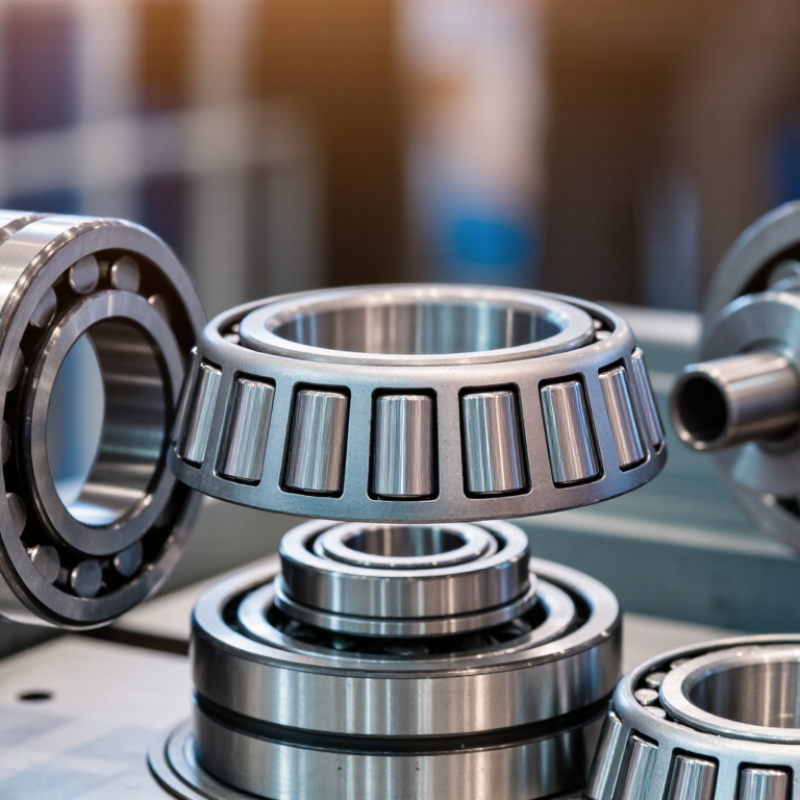
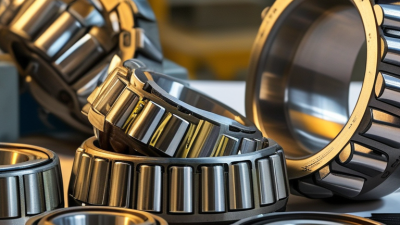
A taper roller bearing uses a cone-shaped inner ring, tapered rollers, and an outer cup. The rollers meet the raceways along angled contact lines. This geometry lets the bearing carry radial loads and axial thrust at the same time. It is not a simple washer. When a shaft turns, the rollers spread force across several contact points. That reduces local stress and supports steady rotation under demanding conditions.

In field inspections, uneven wear often reveals poor setup before failure becomes obvious. One edge may show polishing, while the opposite edge carries dark marks. This pattern can indicate misalignment, incorrect preload, or a bent shaft. Small errors matter. Proper adjustment creates enough contact without restricting movement. Excessive preload raises friction and heat. Too much clearance can cause vibration, impact, and unstable rotation.

Choosing the right taper roller bearing starts with the actual load direction and magnitude. Check radial load, axial load, speed, operating temperature, lubrication, and available space. A paired arrangement may handle thrust from both directions. The bearing’s load rating helps, but it should not be the only decision. I would also review shaft hardness, housing stiffness, and sealing conditions. A clean installation is essential. Dirt can enter during mounting, even when the bearing looks protected. Calculation software is useful, yet it cannot fully predict poor alignment or neglected lubrication. Real-world checks matter.
Assessing Load, Speed, and Operating Conditions

How to Choose the Right Taper Roller Bearing?

Load assessment should begin with the actual force path, not the catalog title. Taper roller bearings support combined radial and axial loads, but their capacity changes with contact angle and roller geometry. Calculate the equivalent dynamic load, P, from measured radial and thrust forces. ISO 281:2007 defines the basic rating life, L10, as the life reached by 90% of identical bearings under stated conditions. Its familiar relationship, L10 = (C/P)p, is useful, but it is not a guarantee. Shock, misalignment, and contamination can reduce real service life sharply. ISO 76:2006 also provides the method for checking static load capacity. Do not ignore it during start-up or emergency stops.

Speed requires more than comparing revolutions per minute. A bearing running at 1,800 rpm may operate safely in one housing and overheat in another. Check the limiting speed, cage design, preload, lubricant viscosity, and heat dissipation together. Grease and oil behave differently. So does a cold start. The operating temperature should be recorded near the bearing, not guessed from ambient air. Dust, water, and poor seals matter. ISO 281 allows modified life calculations using lubrication and contamination factors, yet those inputs are often estimated too generously. That is where many selections become optimistic. A practical review combines ISO calculations, load data from the machine, and monitored vibration, temperature, and lubricant condition during commissioning.

Selecting the Correct Bearing Size and Internal Geometry

How to Choose the Right Taper Roller Bearing?

Selecting the correct bearing size starts with the operating loads, not the shaft diameter alone. Measure the shaft, housing bore, available width, and shoulder locations carefully. A bearing that fits physically may still have insufficient load capacity. Calculate radial and axial loads under normal and peak conditions. Include shock loads from impacts, starts, stops, and uneven surfaces. Real machines rarely operate under perfect conditions.

Internal geometry matters just as much. The contact angle influences axial capacity and load distribution. A larger angle generally supports higher axial loads, but it can increase friction and heat. Choose the cone and cup geometry according to the combined load direction. Check the manufacturer’s rated capacity, speed limits, lubrication method, and mounting arrangement. These figures should come from verified technical data.

Do not ignore internal clearance.

Excessive clearance can create vibration, noise, and uneven wear. Excessive preload can generate heat and shorten service life. Shaft and housing tolerances also affect the final setting. Thermal expansion may reduce clearance during operation, especially in high-temperature equipment. In practice, adjustment often needs measurement after assembly, not guesswork. I have seen correct-looking parts fail because the spacer width was overlooked. Recheck the fit, rotation, temperature, and contact pattern before releasing the machine.

How to Choose the Right Taper Roller Bearing? - Selecting the Correct Bearing Size and Internal Geometry
Bearing Designation Series Bore Diameter
(d, mm)
Outside Diameter
(D, mm)
Overall Width
(T, mm)
Inner Ring Width
(B, mm)
Outer Ring Width
(C, mm)
Internal Geometry Primary Load Characteristic Typical Selection Use
30204 302 20 47 15.25 14 12 Standard single-row geometry with a relatively compact cross-section and moderate contact angle. Balanced radial and axial load capacity. Compact shafts, light-duty gearboxes, hubs, and general machinery.
30205 302 25 52 16.25 15 13 Standard geometry designed for a compact radial envelope. Balanced load capacity with good space efficiency. Small wheel hubs, conveyors, pumps, and shaft-supported components.
30206 302 30 62 17.25 16 14 Standard single-row geometry with moderate roller length and contact angle. Suitable for combined radial and axial loading. Industrial gear drives, rotating shafts, and medium-duty hubs.
30207 302 35 72 18.25 17 15 Compact standard geometry with a moderate included contact angle. General-purpose combined-load performance. Automotive-style hubs, reducers, pumps, and machine-tool assemblies.
30208 302 40 80 19.75 18 16 Standard geometry optimized for a relatively narrow installation space. Balanced radial capacity and one-direction axial capacity. Medium-duty transmissions, wheel ends, and industrial shafts.
30210 302 50 90 21.75 20 17 Compact standard single-row geometry for common shaft sizes. Good compromise between capacity, speed, and mounting space. Gearboxes, conveyors, agricultural equipment, and general industrial drives.
30310 303 50 110 29.25 27 23 Heavier geometry with a larger cross-section and steeper contact-angle family than the 302 series. Higher axial-load capability and increased radial load capacity. Heavy-duty gear drives, industrial transmissions, and high-load shaft supports.
32210 322 50 90 24.75 23 19 Wider internal geometry than the 302 series while retaining the same basic bore and outside diameter. Higher load capacity within a similar radial envelope. Applications requiring greater stiffness and load capacity without increasing outside diameter.
Dimensions are standard metric boundary dimensions commonly used for single-row tapered roller bearings. The inner ring and outer ring are normally installed as a matched assembly, and the final internal clearance or preload is established during mounting and adjustment. Confirm the required static load, dynamic load, speed, lubrication, shaft fit, housing fit, and operating temperature before final selection.

Checking Fit, Clearance, Lubrication, and Sealing Requirements

How to Choose the Right Taper Roller Bearing?

Checking Fit, Clearance, Lubrication, and Sealing Requirements

A suitable taper roller bearing begins with a verified fit.

Measure the shaft and housing, rather than trusting old drawings. A micrometer can reveal wear near the shoulder. Check roundness at several points. The inner ring should seat firmly without damaging the mounting surfaces. Excessive interference can reduce internal clearance. A loose fit may allow fretting, noise, and ring creep. Small errors become serious under heavy radial and axial loads.

Clearance needs equal attention.

Follow the bearing maker’s specified adjustment method and operating conditions. Temperature, speed, load, and shaft expansion all affect the final setting. Use a dial indicator when checking end play. Do not force a tight setting because the assembly feels smoother. It may overheat after twenty minutes of operation. This is easy to miss. Recheck after running-in, especially when the housing becomes noticeably warm.

Lubrication must match the speed, load, and environment.

Use enough grease to protect the rollers, but leave room for expansion. Oil may suit high-speed or continuously cooled equipment better. Keep tools and containers clean. A single metal particle can mark a raceway. Seals should block water and dust without excessive lip pressure. Inspect the seal lip, seating surface, and direction before assembly. I have seen correct bearings fail early because sealing was treated as an afterthought. The overlooked detail often decides service life.

Comparing Bearing Quality, Installation Needs, and Total Cost

How to Choose the Right Taper Roller Bearing?

Bearing quality should be judged by evidence, not polished packaging. Check dimensional accuracy, steel cleanliness, hardness, surface finish, and traceability records. ISO 281:2007 supports rating-life calculations using load, speed, and reliability factors. A higher dynamic load rating can extend calculated life, but only when lubrication and alignment remain controlled. I have seen expensive bearings fail early because contamination entered during unpacking. Quality is not a substitute for discipline.

Installation needs can change the purchase decision. Confirm shaft and housing fits before ordering. Set the correct internal clearance or preload, then measure it with suitable tools. Use clean gloves, filtered lubricant, and controlled heating. Never drive through the rolling elements. The U.S. Department of Energy’s Operations & Maintenance Best Practices guide reports predictive maintenance can reduce maintenance costs by 8–12% and downtime by 35–45%. Vibration checks, temperature trends, and lubricant inspection make those savings more realistic.

Total cost includes much more than the invoice. Compare expected life, relubrication intervals, seals, installation labor, inspection time, energy use, and replacement risk. A low-cost bearing may demand frequent adjustments. A premium specification may be wasteful on a lightly loaded, clean application. Calculate cost per operating hour using the ISO 281 life estimate and site failure records. Be honest about uncertainty. Your first estimate may be wrong. Recheck it after three maintenance cycles.