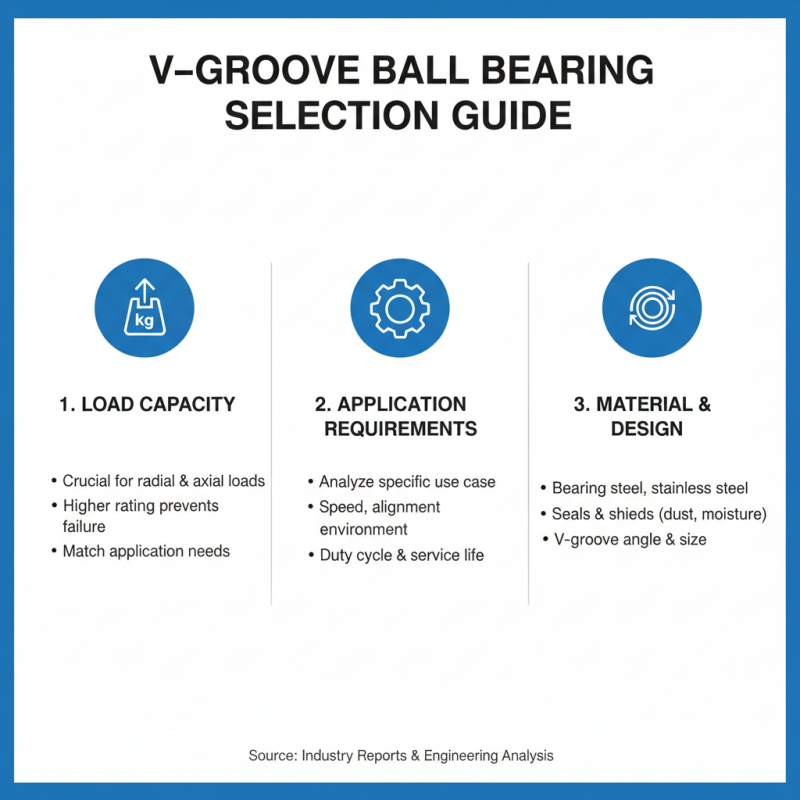
What is V Groove Ball Bearing and How to Choose the Best?
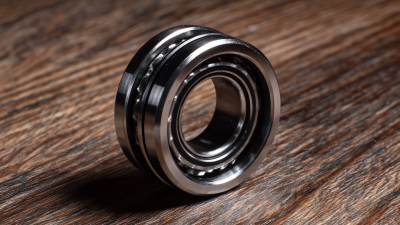
V Groove Ball Bearings are crucial in various applications, especially in machinery and equipment. These specialized bearings have a unique groove design, allowing them to move smoothly along V-shaped tracks. Their functionality makes them vital in industries like automation, fabrication, and even in household items.
Choosing the best V Groove Ball Bearing requires understanding specific needs. Different applications demand various sizes and load capacities. Factors like speed, environment, and material strength play significant roles in this decision-making process. However, customers often overlook these details, leading to suboptimal choices.
Experience and professional guidance can significantly improve your selection. Engaging with experts can help identify the right type for your specific demands. Remember, a wrong choice could lead to operational inefficiency. Ensure you prioritize quality and compatibility when sourcing these essential components.
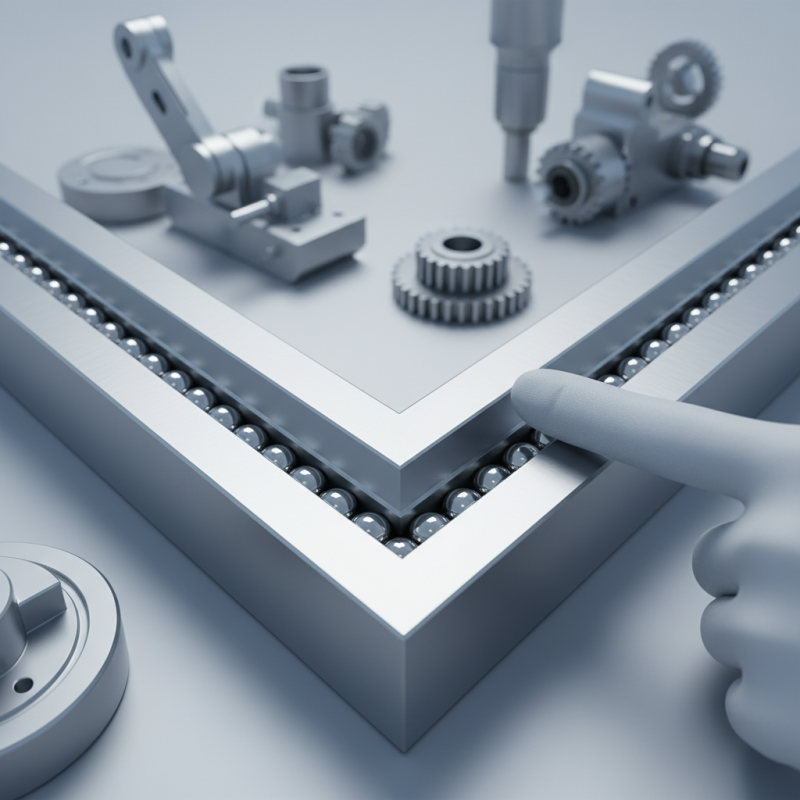
Understanding V Groove Ball Bearings: Definition and Functionality
V Groove ball bearings are specialized components designed for smooth motion along a track or groove. They consist of ball bearings housed in a circular raceway, allowing for precise linear movement. The unique V-shaped groove enables these bearings to guide and stabilize equipment, making them ideal for applications in a variety of industries, such as conveyors and robotics. They play a crucial role in reducing friction and enhancing efficiency.
When choosing a V Groove ball bearing, consider key factors like load capacity, speed rating, and material. The load capacity ensures the bearing can handle the weight of your application. The material affects durability and performance under different conditions. Unnecessarily high speed ratings can lead to premature wear, while lower ratings may not meet operational needs. It's vital to weigh these options carefully.
An often overlooked aspect is maintenance. Regular inspections can prevent performance issues and extend lifespan. However, not everyone makes this a priority. It’s easy to become complacent. Some may forget that even the best bearings require cleaning and lubrication to function optimally. Remember, every application is unique. Understanding these details can prevent costly mistakes and enhance overall system reliability.
Key Benefits of Using V Groove Ball Bearings in Various Applications
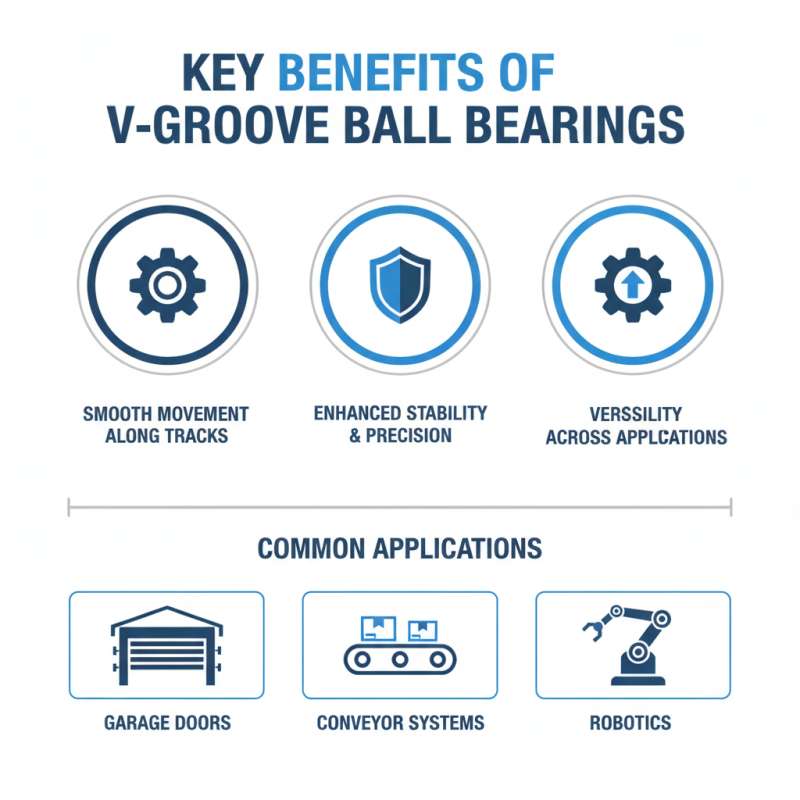
V Groove ball bearings play a crucial role in various mechanical applications. These bearings are designed with a V-shaped groove, allowing for smooth movement along a rail or track. The design greatly enhances stability, making them ideal for equipment such as garage doors, conveyor systems, and even robotics.
One key benefit of V Groove ball bearings is their ability to handle both radial and axial loads. This versatility ensures they can operate effectively in diverse settings. Their low friction properties reduce wear and increase the lifespan of machinery. Moreover, they offer easy installation and maintenance, saving time and costs.
However, it's important to assess the specific requirements of your application. Misjudging these needs may lead to inefficiencies. Choosing the wrong size or load rating can impact performance. It's vital to consider factors like speed, load capacity, and environmental conditions. Doing this will ensure you reap the full benefits of V Groove ball bearings.
Comparing Different Types of V Groove Ball Bearings on the Market
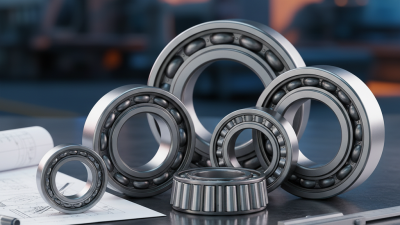
When choosing V groove ball bearings, understanding the types available on the market is crucial. These bearings are designed for specific applications, and their performance can vary widely. Common types include stainless steel, plastic, and hybrid bearings. Each material has its strengths and weaknesses. Stainless steel offers durability and resistance to corrosion, while plastic bearings provide lightweight options. Hybrid types combine elements for better performance in specific conditions.
Consider load capacity and speed ratings when comparing options. These specifications can drastically affect your project outcomes. Note that not all V groove ball bearings are created equal. For instance, some may wear out faster under heavy loads. Others might not perform well in high-speed applications. It’s important to assess your project requirements carefully. Many users overlook these details, which can lead to unforeseen issues.
Access to reliable sources and expert reviews enhances your decision-making. Seek out well-documented insights into bearing performance. Some online platforms feature user feedback, which can provide real-world insights. Remember, a bearing may appear ideal in theory but can fail in practice. It’s often beneficial to analyze both expert opinions and practical experiences. Engaging with seasoned professionals can also shed light on your choices.
Maintaining and Troubleshooting V Groove Ball Bearings for Longevity
V groove ball bearings are essential in various applications requiring smooth rotary motion. To ensure their longevity, proper maintenance is crucial. Regularly inspecting these bearings for wear and tear helps prevent unexpected failures. Look for any unusual noises or vibrations. Such signs can indicate problems that need immediate attention.
Routine cleaning of the bearings is necessary. Dust and debris can accumulate, leading to reduced performance. Use a soft brush or compressed air to carefully remove any contaminants. After cleaning, apply appropriate lubrication to minimize friction. The type of lubricant matters; it should be compatible with your specific application.
Tips: Always monitor operating temperatures. Excess heat can cause premature failure. Keeping your bearings within the recommended temperature range is vital. Additionally, ensure proper alignment during installation. Misalignment can lead to uneven wear and reduce lifespan. Always take a moment to double-check alignment for optimal performance.
V Groove Ball Bearing Performance Comparison