Choosing reliable Groove Ball Bearings manufacturers is a practical decision, not a simple catalog exercise. Global buyers must examine accuracy, load capacity, sealing performance, material quality, and delivery consistency. A bearing may look identical online, yet perform differently inside a high-speed motor or conveyor system.
Experienced purchasing teams usually compare manufacturer history, factory capabilities, quality certificates, and application support. They also request inspection reports, traceability records, and sample testing before placing large orders. ISO-based quality systems can provide useful evidence, but certification alone does not guarantee perfect performance. A polished catalog is not proof.
Real applications reveal more. Consider a dusty workshop, a refrigerated warehouse, or a production line running continuously for twelve hours. Temperature, vibration, moisture, shaft alignment, and lubrication can change the correct bearing choice. Strong manufacturers explain these factors clearly and offer practical technical guidance. They do not simply promote the lowest price.
This guide reviews leading Groove Ball Bearings manufacturers for global buyers. It considers product range, engineering experience, customization, quality control, export capability, and after-sales support. It also examines less visible details, such as packaging strength, batch consistency, and response time when problems occur. No supplier is perfect. That matters. Buyer requirements differ, and a recognized brand may still be unsuitable for a specific machine. Careful comparison remains essential.
Top Groove Ball Bearings Manufacturers for Global Buyers
What Groove Ball Bearings Are and How They Work
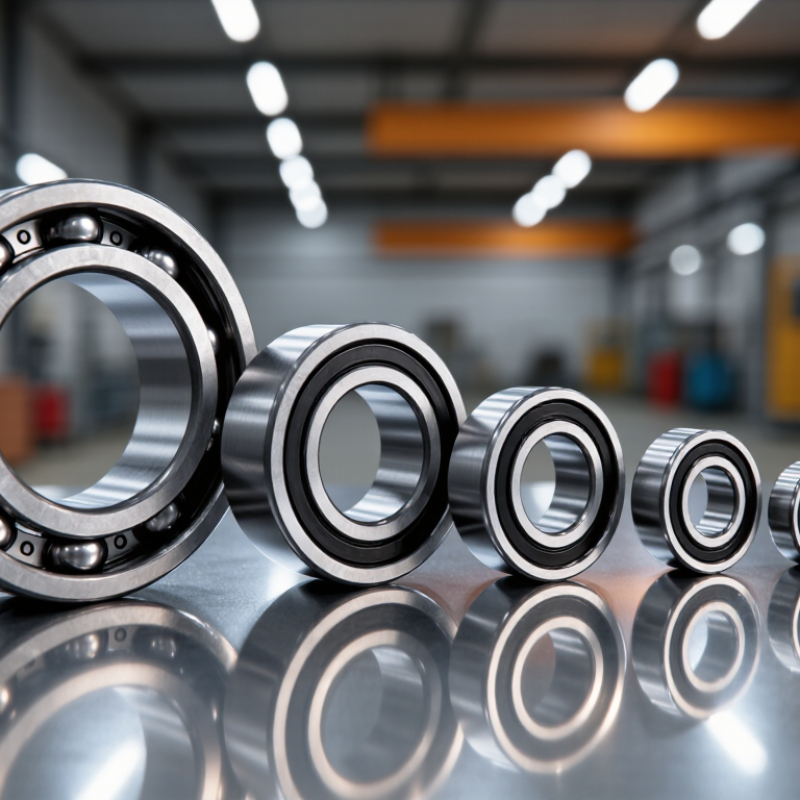
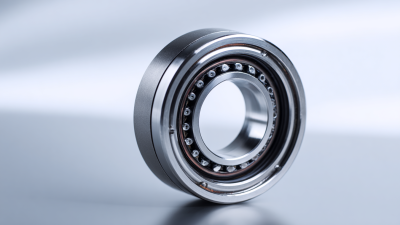
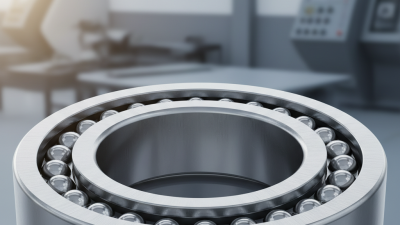
A groove ball bearing uses balls between two hardened rings. The inner ring fits the rotating shaft, while the outer ring sits inside a housing. A cage spaces the balls evenly and prevents contact between them. Simple, but highly engineered.
As the shaft turns, the balls roll along deep raceway grooves. Rolling creates less friction than sliding contact. This helps equipment run quietly and efficiently. These bearings mainly support radial loads, such as pulley weight. They can also handle moderate axial loads from side pressure.
Seals or shields help protect the internal lubricant from dust and moisture. However, protection is never absolute. A perfect selection on paper can still fail in a dirty housing. Excessive loads, poor alignment, over-tight fits, and incorrect lubrication can raise temperature quickly. In maintenance work, checking noise, vibration, and surface wear often reveals problems early. Selection is not always obvious. Speed, load, temperature, space, and operating cleanliness must be considered together.
Tips: Match the bearing’s clearance to the operating temperature. Keep mounting tools away from the balls and seals. Never hammer the ring that carries the fitting force. Check the shaft and housing for scratches before installation. A clean, light lubricant film is usually better than overfilling. Recheck noise after startup, because small changes can signal mounting errors.
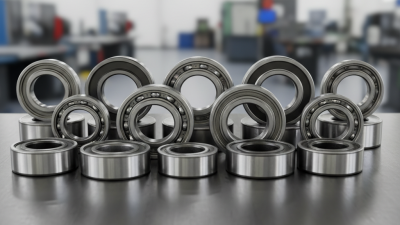
Deep-groove ball bearings use raceway grooves in both rings to guide rolling balls. This design supports radial loads and moderate axial loads while offering low friction and reliable operation across many industrial applications.
The chart shows nominal boundary dimensions for selected 6200-series deep-groove ball bearings. Dimensions are based on standard bearing designation conventions; actual load ratings, sealing arrangements, clearance, and speed limits vary by design and application.
A reliable comparison begins with documented quality standards, not attractive catalog photos. Check whether the manufacturer follows ISO 9001 for quality management. For bearing performance, review references to ISO 492 and ISO 281. These standards help assess dimensional accuracy, tolerance classes, and basic load ratings.
Material control deserves close attention. Ask for steel certificates, heat-treatment records, and batch traceability. A dependable factory should connect each bearing to inspection data. Look for checks on vibration, noise, radial clearance, surface finish, and rotational smoothness. Request sample reports, not only general promises. Small details matter.
Production capability must match your application. Confirm available bore sizes, seal types, cage materials, and tolerance grades. Ask how the supplier manages custom orders and urgent replacements. Packaging should protect bearings from moisture, dust, and impact during long-distance transport. Logistics performance is part of quality.
Do not compare prices alone. A cheaper bearing may increase downtime, fitting errors, or replacement costs. Evaluate testing equipment, technical support, complaint handling, and delivery consistency. Independent audits can add useful evidence, although audits are not perfect. I would also test samples under realistic loads and speeds before approving a large order. One overlooked detail can change the result.
Leading groove ball bearing manufacturers serve demanding markets with consistent production, clear documentation, and responsive technical support. Experienced buyers often inspect raceway finish, radial clearance, sealing quality, and lubricant compatibility before approving a supplier. These details affect vibration, service life, and maintenance costs in motors, conveyors, pumps, and industrial equipment.
Reliable manufacturers use controlled heat treatment, precision grinding, and automated inspection to limit dimensional variation. They should provide load ratings, material specifications, tolerance data, and batch traceability. Export-ready suppliers also understand packaging risks. Moisture-resistant wrapping, firm separators, and shock-resistant cartons can protect bearings during long transport. Small details matter.
Not every supplier performs equally well.
A polished catalog does not prove stable quality. Buyers should request sample reports, audit production records, and compare test results with actual operating conditions. A useful evaluation may include noise testing, temperature checks, grease analysis, and endurance trials under realistic loads. Some manufacturers communicate quickly but offer weak after-sales support. Others produce excellent bearings yet struggle with delivery consistency. That gap deserves attention.
Global buyers should review minimum order quantities, replacement policies, technical response times, and inspection procedures before signing agreements. Clear communication reduces misunderstandings about bore sizes, sealing types, clearance classes, and delivery schedules. Manufacturers willing to discuss failures honestly often inspire more confidence than suppliers promising perfect performance. In practice, dependable partnerships grow through measurable results, not attractive claims.
When assessing groove ball bearing manufacturers, quality begins with measurable production controls. Check steel certificates, heat-treatment records, and dimensional inspection reports for each batch. Experienced buyers should request radial clearance data, noise readings, and seal performance results. Sample bearings should be tested under realistic speed and load conditions, not only displayed in clean packaging.
Capacity requires more than a large factory photograph. Ask for verified monthly output, current machine utilization, and backup equipment. Review lead times during peak demand, raw material storage, and the supplier’s ability to maintain consistent tolerances. A factory producing millions of units may still struggle with a sudden custom order. Capacity claims need evidence. No supplier is perfect.
Technical support often separates a dependable partner from a low-cost source. Engineers should be able to review shaft fits, housing tolerances, lubrication choices, and operating temperatures. Request clear drawings, application guidance, and failure-analysis reports when problems occur. Response time matters, especially when a production line stops. A practical supplier should explain findings with measurements and photographs, not vague assurances. I have seen polished audit files hide weak follow-up, so buyers should test support before signing a large contract. Send a sample application question and evaluate the accuracy, speed, and clarity of the reply.
| Assessment Area | Key Data Dimension | Practical Benchmark or Technical Reference | Evidence Global Buyers Should Request | Why It Matters |
|---|---|---|---|---|
| Product Quality | Dimensional accuracy | ISO 492 tolerance compliance; P0 is the normal commercial class, while P6 and P5 provide progressively tighter dimensional and rotational accuracy. | Inspection reports showing bore diameter, outside diameter, width, and radial runout measurements. | Accurate dimensions support proper shaft and housing fits and reduce vibration during operation. |
| Product Quality | Material grade | Common bearing steel: 100Cr6 / AISI 52100. Stainless options commonly use corrosion-resistant grades such as AISI 440C. | Material certificates, heat-treatment records, and chemical-composition reports. | Steel composition and heat treatment directly influence fatigue life, hardness, corrosion resistance, and dimensional stability. |
| Product Quality | Hardness and heat treatment | Through-hardened bearing rings and balls are commonly controlled within approximately 58–64 HRC, subject to the selected material and manufacturer specification. | Hardness test results, furnace charts, quenching records, and sampling plans. | Consistent hardness helps prevent premature raceway wear, brinelling, and rolling-contact fatigue. |
| Product Quality | Internal radial clearance | Standard clearance is normally identified as CN/C0; C2 is lower and C3, C4, and C5 are progressively higher. The correct class depends on temperature, speed, and fit. | Clearance test data by batch and confirmation of the selected clearance code. | Incorrect clearance can cause excessive heat, noise, vibration, or insufficient load-carrying performance. |
| Product Quality | Seal and shield configuration | Typical configurations include open, metal-shielded, and contact-sealed designs. Contact seals generally provide better contamination protection but may increase friction. | Technical drawings, seal material specifications, friction-torque data, and temperature limits. | The sealing arrangement affects lubricant retention, contamination resistance, running torque, and service life. |
| Product Quality | Lubricant specification | Grease selection should state thickener type, base oil, viscosity, operating temperature range, and filling quantity. A common industrial grease operating range is approximately −20°C to +120°C, depending on formulation. | Grease technical data sheet, compatibility statement, filling-weight records, and relubrication guidance. | Unsuitable grease or filling quantity can lead to overheating, noise, oxidation, and shortened bearing life. |
| Product Quality | Load rating and fatigue life | Verify dynamic load rating C, static load rating C0, and basic rating life calculated under ISO 281 principles. | Load-rating tables, calculation sheets, application assumptions, and life calculations based on speed and load. | Load ratings allow buyers to compare suitability for motors, pumps, gearboxes, conveyors, and other equipment. |
| Product Quality | Noise and vibration control | Ask for a documented noise or vibration grading system and test conditions. Results should identify speed, load, sensor method, and acceptance limits. | Noise/vibration test reports, calibrated-equipment records, and sample traceability. | Low and consistent vibration is important for electric motors, fans, precision machinery, and high-speed equipment. |
| Manufacturing Capacity | Product range coverage | Confirm availability across standard metric bore sizes, common inch sizes where required, open designs, shielded designs, sealed designs, and clearance classes. | Current product catalog, dimensional drawings, available series list, and sample lead times. | A broad range can reduce the number of suppliers, qualification cycles, and inventory variations. |
| Manufacturing Capacity | Monthly output and bottleneck capacity | Capacity should be reported separately for turning, heat treatment, grinding, assembly, sealing, and final inspection rather than as one overall figure. | Capacity statement, equipment list, shift pattern, utilization data, and production-planning records. | The true constraint may be heat treatment, precision grinding, assembly, or inspection rather than machining alone. |
| Manufacturing Capacity | Production lead time | Request separate lead times for standard stock items, made-to-order items, customized clearance or grease, and new tooling. Require the supplier to state the assumptions. | Recent order records, standard production calendar, and written lead-time commitment. | Clear lead-time definitions improve production planning and reduce the risk of missed delivery dates. |
| Manufacturing Capacity | Batch traceability | Each batch should be traceable from raw material and heat treatment through grinding, assembly, lubrication, inspection, packaging, and shipment. | Sample inspection certificate, batch code format, process traveler, and retention-period policy. | Traceability supports root-cause analysis, recalls, warranty handling, and regulatory documentation. |
| Manufacturing Capacity | Quality management system | ISO 9001 certification is a useful baseline. Automotive applications may additionally require IATF 16949, while environmental controls may be supported by ISO 14001. | Valid certificates, certification scope, issuing body, expiry date, and latest audit status. | A certified and audited management system provides structured control of nonconformities, documentation, and corrective actions. |
| Manufacturing Capacity | Process capability | For critical dimensions, request capability data such as Cp/Cpk or equivalent statistical-process-control evidence. The buyer should define the required acceptance threshold. | Control charts, capability studies, gauge repeatability results, and control-plan documents. | Capability data indicates whether a process can consistently meet specifications rather than only pass occasional inspections. |
| Technical Support | Application engineering | Technical support should cover bearing selection, load and life calculations, shaft/housing fits, clearance, speed, sealing, lubrication, and operating temperature. | Engineer contact details, calculation examples, selection guides, and response-time commitment. | Correct application advice helps prevent failures caused by incorrect fits, overload, misalignment, contamination, or lubrication. |
| Technical Support | Drawing and specification control | Drawings should clearly state boundary dimensions, tolerances, clearance, seal type, material, lubricant, cage design, and revision level. | Controlled PDF or CAD drawings, revision history, change-notification procedure, and approval workflow. | Controlled technical documents prevent production errors and ensure that replacement parts remain interchangeable. |
| Technical Support | Failure analysis | A capable supplier should distinguish common failure modes such as fatigue spalling, false brinelling, electrical fluting, contamination damage, smearing, and lubrication failure. | 8D reports, photographs, metallurgical analysis, corrective-action records, and sample-return procedure. | Structured failure analysis helps identify the actual root cause instead of replacing components without correcting the application problem. |
| Technical Support | Sample and validation support | Qualification should include dimensional inspection, fit verification, noise or vibration testing where relevant, temperature testing, and application-level endurance testing. | Sample plan, validation protocol, test reports, acceptance criteria, and approval records. | Testing before mass production lowers the risk of field failures and costly line interruptions. |
| Global Buyer Readiness | Export documentation | Required documents may include commercial invoice, packing list, certificate of origin, inspection certificate, and transport documents, depending on the destination and contract. | Redacted examples of export documents and a statement of supported trade terms. | Complete documentation reduces customs delays and supports accurate receiving and payment processes. |
| Global Buyer Readiness | Packaging and storage | Packaging should protect against humidity, dust, impact, and corrosion. Storage instructions should specify temperature, humidity, stacking, and recommended shelf-life conditions. | Packaging specification, corrosion-protection method, storage instructions, and transport test records where applicable. | Good packaging preserves bearing cleanliness and prevents corrosion before installation. |
| Global Buyer Readiness | Nonconformance and warranty handling | Commercial terms should define inspection windows, evidence requirements, corrective-action timing, replacement or credit procedures, and warranty exclusions. | Quality agreement, warranty policy, complaint workflow, and sample corrective-action report. | Clear responsibilities reduce disputes and accelerate resolution when products do not meet requirements. |
| Recommended Buyer Score | Supplier evaluation weighting | Quality: 35%; Capacity and delivery: 25%; Technical support: 20%; Documentation and compliance: 10%; Commercial terms: 10%. | Use a documented scorecard and require evidence for every scored item. | A weighted model prevents the lowest price from outweighing quality, continuity of supply, and engineering capability. |
| Recommended Buyer Score | Minimum qualification gate | Pass only when mandatory requirements are verified: valid quality-system documentation, traceability, agreed specifications, acceptable samples, and confirmed production capacity. | Signed technical specification, approved sample report, audit result, capacity confirmation, and quality agreement. | Mandatory gates prevent suppliers with unacceptable technical or operational risks from entering the approved list. |

Top Groove Ball Bearings Manufacturers for Global Buyers
Important Considerations When Importing Groove Ball Bearings
Importing groove ball bearings starts with a precise operating profile. Specify bore, outside diameter, width, radial load, speed, temperature, and expected service life. A catalog match is not enough. Internal clearance can affect noise, heat, and fit after installation. Choose sealing based on dust, moisture, and lubricant needs. Open bearings suit clean housings, while sealed versions reduce maintenance. Small details matter.
Ask each manufacturer for material grades, heat-treatment data, dimensional tolerances, and test records. Confirm whether measurements follow recognized international standards. Request samples from the intended production line, not showroom stock. Check certificates, traceability labels, and batch numbers. Inspect surface finish and rotation smoothness before approving volume orders. Third-party inspection may be worthwhile for critical machinery, although it adds time and cost.
Import costs extend beyond unit price. Calculate tooling, packaging, freight, duties, insurance, inspection, and possible rejection costs. Use moisture-resistant packaging when shipments cross humid routes. Confirm carton markings and documents meet destination-country customs requirements. Clarify lead time, minimum order quantity, payment terms, and remedies for nonconforming goods. Do not overlook storage. Bearings can suffer before use. Even careful sourcing has weak points. A supplier may meet drawings but miss communication deadlines. Recheck assumptions when a quotation looks unusually attractive.