What is a Taper Roller Bearing and How Does it Work?
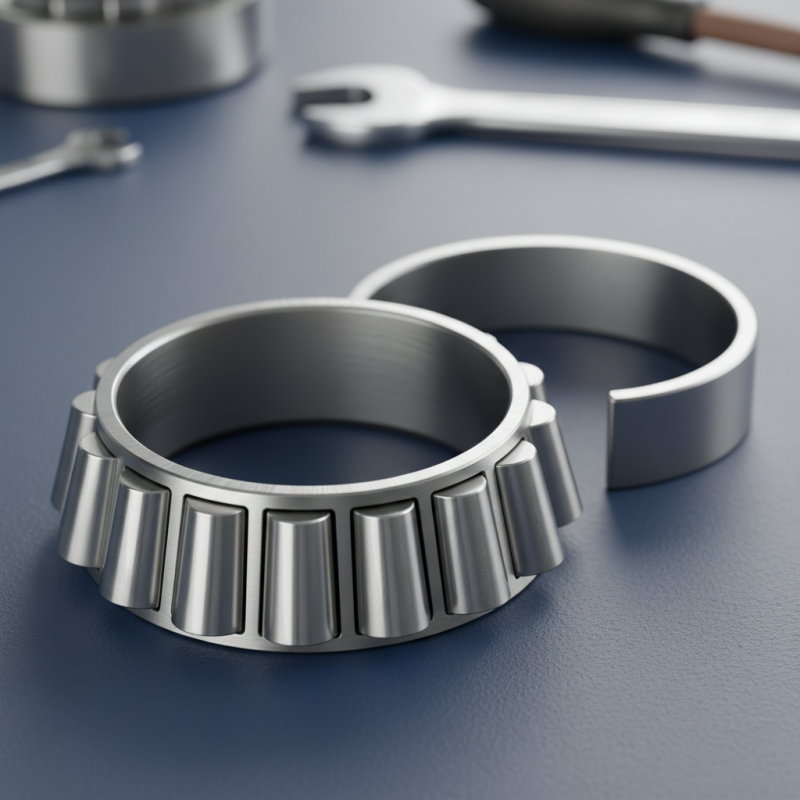
A Taper Roller Bearing is a crucial component in mechanical systems. Its unique design allows for efficient load distribution. This bearing type features tapered inner and outer rings, with rollers positioned between them. The tapered shape enables it to handle both radial and axial loads effectively.
Understanding how a Taper Roller Bearing functions is essential for various applications, from automobiles to industrial machinery. When loads are applied, the rollers subtly adjust to ensure stability. This adaptability enhances performance and reduces wear over time.
However, improper installation or lack of maintenance can lead to failures. It’s vital to follow manufacturer guidelines for both setup and servicing. Overall, Taper Roller Bearings play a significant role in engineering, yet they require careful attention to realize their full potential.
What is a Taper Roller Bearing?
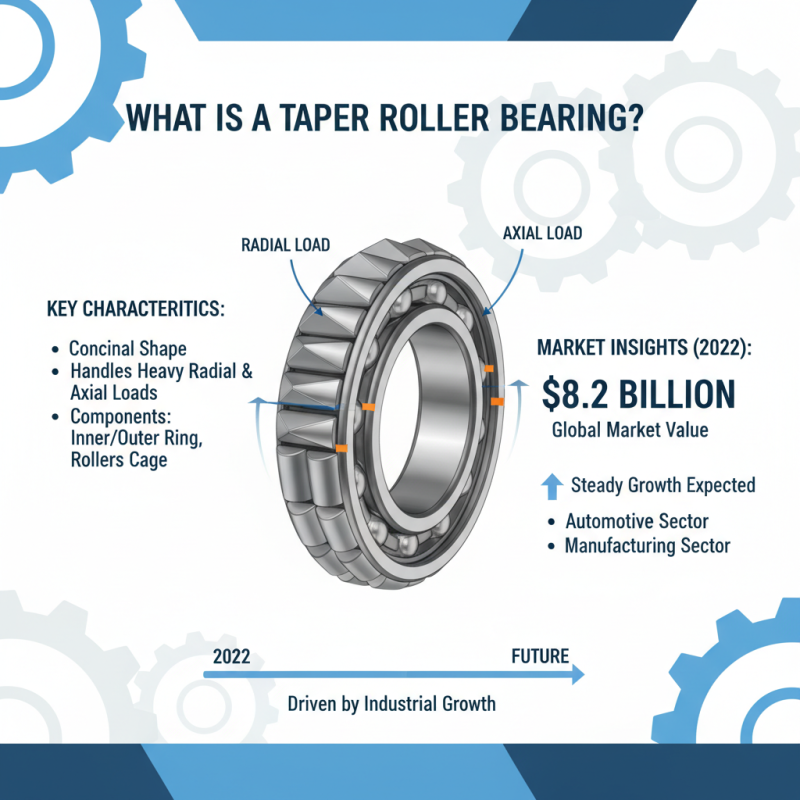
Taper roller bearings play a crucial role in various industrial applications. They are characterized by their conical shape, which allows them to handle heavy radial and axial loads simultaneously. These bearings consist of an inner ring, outer ring, rolling elements, and a cage to separate the rollers. According to a recent market analysis, the global tapered roller bearings market was valued at approximately $8.2 billion in 2022, with expectations of steady growth driven by the automotive and manufacturing sectors.
Their ability to support both axial and radial loads makes taper roller bearings particularly valuable in applications like gearboxes and wheel hubs. Unlike standard ball bearings, taper roller bearings align with the load direction. This feature reduces the risk of fatigue failure. Research indicates that improperly installed bearings can decrease efficiency by as much as 40%. Therefore, precision in installation and alignment is crucial for optimal performance.
Despite their advantages, taper roller bearings have limitations. They require regular maintenance, especially in high-load conditions. Failure to lubricate properly can lead to increased wear. Industrial users should regularly monitor these bearings. Surprising findings show that nearly 30% of bearing failures are due to lubrication neglect. Awareness of these aspects can improve lifespan and reliability, making taper roller bearings an essential component in machine performance.
Key Components of Taper Roller Bearings
Taper roller bearings are essential components in various machinery. Their design allows them to handle axial and radial loads effectively. The key components of taper roller bearings include the inner race, outer race, rollers, and cage. Each part plays a vital role in ensuring smooth operation.
The inner race provides a surface for the rollers to rotate around. The outer race supports the entire assembly and connects it to the housing. According to a report by the American Bearing Manufacturers Association, taper roller bearings have a higher load capacity than standard ball bearings. They are used in applications like automotive gearboxes and heavy machinery. The bearings distribute loads evenly across the rollers, minimizing wear and enhancing lifespan.
Rollers in taper bearings are designed in a conical shape, allowing them to fit snugly in the races. This unique geometry helps in handling higher loads at various angles. A common issue in using these bearings is improper alignment, which can lead to premature failure. Regular maintenance is crucial. Ensuring that the lubricant is within specifications can enhance performance and reliability.
Taper Roller Bearings: Key Components and Their Load Capacities
Working Principle of Taper Roller Bearings
Taper roller bearings are essential components in various machinery and automotive applications. They support axial and radial loads effectively. Their unique design includes a tapered roller shape that minimizes friction and enhances performance. This structure allows for superior load distribution, which significantly extends bearing life.
The working principle of taper roller bearings relies on their geometric design. Each roller contacts the raceway at a single point. This setup enables them to handle higher loads compared to other bearing types. According to the Timken Company, taper roller bearings can support up to 60% more axial load than their spherical counterparts. The orientation of the rollers is crucial; it permits easy adjustment to axial loads during operations.
Precision is vital for optimal function. Misalignment or improper lubrication can lead to premature failure. The ongoing stress and wear can create noise and heat, negatively impacting efficiency. Regular maintenance and correct installation are essential to prolong life. The complexity of their operation highlights the importance of expert knowledge in selecting and applying taper roller bearings in industrial settings.
Applications of Taper Roller Bearings
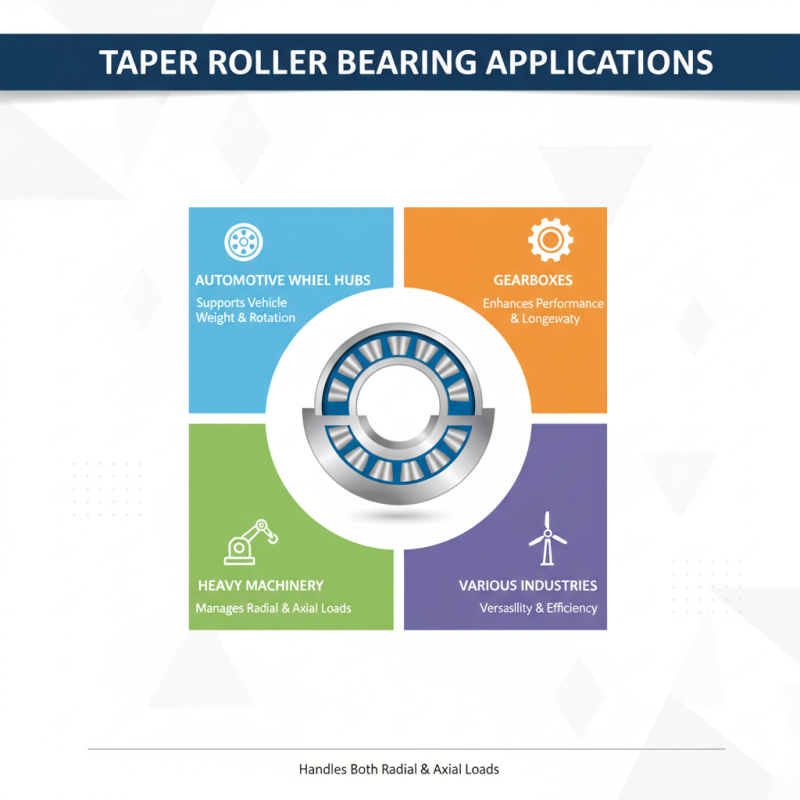
Taper roller bearings are widely used in various industries due to their versatility and efficiency. These bearings can handle both radial and axial loads, making them suitable for heavy machinery. Common applications include automotive wheel hubs, where they support the weight of the vehicle while allowing for smooth rotation. They are also found in gearboxes, contributing to the overall performance and longevity of the system.
In the industrial sector, taper roller bearings are critical in power transmission systems and construction equipment. Their design enables them to bear heavy loads and withstand harsh conditions. However, their performance depends on proper installation and maintenance. If misaligned, they can cause premature wear. Regular inspections can prevent potential failures and prolong service life. In mining applications, the ruggedness of these bearings must be balanced with efficient lubrication to ensure reliable operation. Attention to detail here is crucial to avoid costly downtime.
Maintenance and Troubleshooting for Taper Roller Bearings
Taper roller bearings require regular maintenance to ensure optimal performance. Regular lubrication is essential. Grease or oil should be applied based on operating conditions. Check for any signs of contamination or wear. Clean the bearing surfaces to prevent damage.
Troubleshooting issues can be straightforward. If you notice unusual noises or vibrations, it may signal a problem. Inspect for misalignment or excessive play. Sometimes, the bearing might be over-tightened, leading to premature failure.
It’s important to regularly check the operating temperature. Elevated temperatures can indicate a lack of lubrication or overload. Take corrective actions promptly. Regular inspections and monitoring can extend the life of taper roller bearings.
What is a Taper Roller Bearing and How Does it Work?
| Dimension |
Specification |
Function |
Common Applications |
Maintenance Tips |
| Inner Diameter |
20 mm |
Load Support |
Automotive Axles |
Regular Lubrication |
| Outer Diameter |
45 mm |
Radial Load Capacity |
Machinery |
Check for Wear |
| Width |
15 mm |
Torque Transmission |
Construction Equipment |
Seal Integrity Check |
| Dynamic Load Rating |
25,000 N |
Bearing Longevity |
Wind Turbines |
Monitor Temperature |
| Static Load Rating |
15,000 N |
Bearing Efficiency |
Railways |
Replace if Noisy |