In the evolving world of engineering and manufacturing, ceramic ball bearings are gaining significant attention. These components offer unique advantages that appeal to global buyers. Their lightweight nature and superior strength set them apart from traditional steel bearings. With increasing demands for efficiency, many industries are exploring the benefits of ceramic ball bearings.
One major advantage is their enhanced durability. They resist wear and corrosion, leading to longer service life. This resilience means less frequent replacements and lower maintenance costs. Additionally, ceramic ball bearings operate effectively at high speeds and temperatures. Such performance is crucial in industries where precision is paramount.
However, it's important to acknowledge that not all applications require ceramic ball bearings. Their initial cost is higher than traditional alternatives, which can be a barrier for some. Buyers must reflect on their specific needs before making a decision. Ultimately, understanding the true value of ceramic ball bearings is essential for informed investment choices.
Ceramic ball bearings are revolutionizing modern engineering. They are increasingly favored for their durability and performance. Unlike traditional steel bearings, ceramic ball bearings offer significant advantages in various applications. Their lightweight nature reduces friction, leading to enhanced efficiency. This characteristic makes them suitable for high-speed machinery and aerospace applications.
Many engineers prioritize the temperature resistance of ceramic materials. They can operate at elevated temperatures, which is critical for performance. This resistance extends the lifespan of machinery and reduces maintenance costs. However, it is essential to ensure that the environment is compatible with ceramic materials. Not all applications may be ideal for ceramics.
Tip: When considering ceramic ball bearings, assess the specific requirements of your project. Testing their performance in simulated environments can provide valuable insights. Opting for expert advice can enhance decision-making. Explore and understand the limitations of ceramic ball bearings compared to other materials. In doing so, you can make informed choices that align with your engineering needs.
Ceramic ball bearings offer enhanced durability and longevity, making them a preferred choice over traditional steel bearings. Studies indicate that ceramic bearings can last up to ten times longer than their steel counterparts. This is due to their unique composition, which resists wear and corrosion. In environments with extreme temperatures, ceramic bearings maintain operational efficiency, often with a failure rate significantly lower than that of steel.
The manufacturing process for ceramic materials contributes to their superior resistance to fatigue. According to a report by the American Bearing Manufacturers Association, ceramic bearings show a lower coefficient of friction, leading to less heat generation during operation. This characteristic not only extends their lifespan but also improves energy efficiency in various applications. Users have noted that switching to ceramic bearings has resulted in reduced maintenance costs and increased productivity.
However, it's essential to recognize potential challenges. Ceramic bearings can be more brittle than steel, which may lead to catastrophic failures under certain stresses. In some cases, the initial investment in ceramic bearings is higher, posing budgetary concerns for some organizations. Nevertheless, long-term savings and efficiency often outweigh these initial hurdles.
Ceramic ball bearings are gaining traction in numerous industries due to their reduced friction properties. According to a report by the **National Institute of Standards and Technology**, ceramic bearings can reduce friction by up to 40% compared to their steel counterparts. This significant reduction in friction leads to enhanced energy efficiency in machinery. In fact, studies show that machines utilizing ceramic bearings can improve energy consumption by as much as 20%.
Another advantage lies in their durability. Ceramic ball bearings are resistant to wear and can withstand extreme temperatures. Research from the **American Ceramic Society** indicates that these bearings typically last four to five times longer than traditional bearings. This reduced wear translates to lower maintenance costs and decreased downtime for businesses.
However, the transition to ceramic ball bearings is not without challenges. Initial costs can be higher, which may deter some buyers. Additionally, these bearings can be more fragile under certain conditions, requiring careful handling. Balancing the short-term investment with long-term benefits is essential for companies seeking to improve efficiency. As industries move toward sustainability, the benefits of ceramic ball bearings warrant serious consideration.
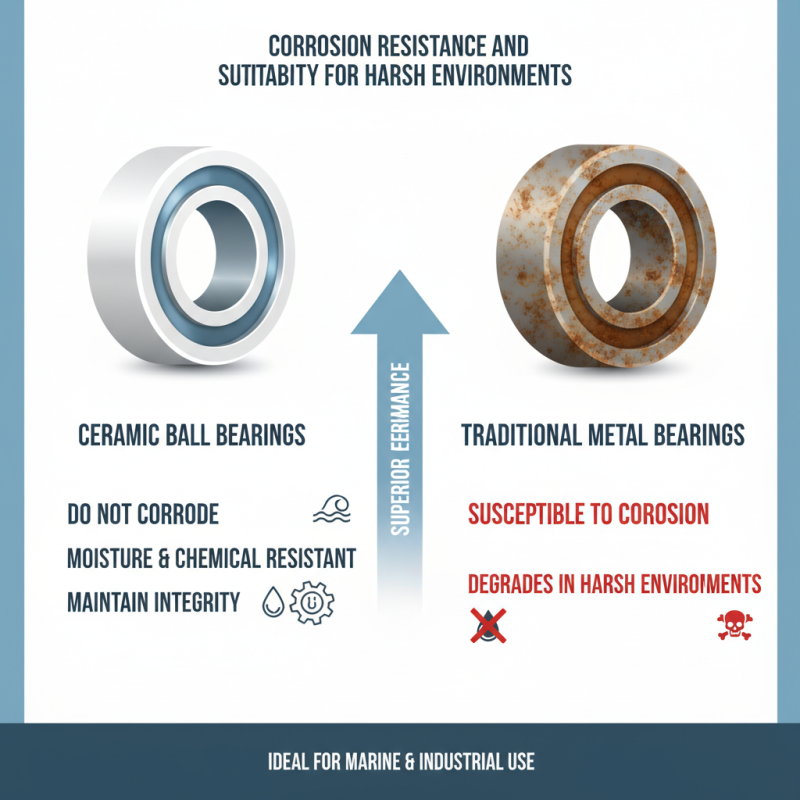
Ceramic ball bearings are gaining popularity for various industries. One of their key advantages is corrosion resistance. Unlike traditional metal bearings, ceramic materials do not corrode easily. This feature is essential in environments exposed to moisture or chemicals. For example, in marine applications or manufacturing settings that involve harsh chemicals, ceramic bearings outperform metal options. They maintain their integrity in extreme conditions.
The durability of ceramic materials allows them to thrive in demanding situations. They can withstand high temperatures and heavy loads. This resilience reduces the need for frequent replacements. Therefore, buyers looking for long-term performance should consider ceramic ball bearings. They are an investment that can pay off over time.
Tips: Always evaluate the specific conditions of your application. Different ceramics are optimized for different uses. Understand the environment your bearings will face. This knowledge can help you avoid potential issues. Regular maintenance is still necessary. Even the best bearings can benefit from care.
Ceramic ball bearings offer significant benefits in terms of cost-effectiveness and long-term savings. They have a longer lifespan than traditional metal bearings, reducing the need for frequent replacements. This durability means businesses can save money on maintenance and downtime. While the initial investment may be higher, the total cost of ownership decreases over time.
Another important factor is their enhanced performance. Ceramic materials resist wear and corrosion. This leads to fewer failures and less frequent repairs. Their lightweight nature also means less energy consumption. Machines can operate more efficiently, which translates into lower operational costs. However, it's crucial for buyers to consider the specific application. Not all scenarios may warrant the switch to ceramic.
Investing in ceramic ball bearings can yield long-term benefits, but careful evaluation is necessary. Some buyers might find that the transition phase poses challenges. Training employees to work with new materials can be an obstacle. It’s essential to weigh these factors against the potential savings. Ultimately, informed decisions will maximize the advantages of ceramic ball bearings.
| Benefit | Description | Long-Term Savings |
|---|---|---|
| Durability | Ceramic materials resist wear and degradation. | Reduced replacement costs due to longer lifespan. |
| Low Friction | Ceramic ball bearings offer lower friction than steel. | Lower energy consumption and operating costs. |
| Corrosion Resistance | Inherent resistance to chemicals and moisture. | Increased lifespan and reduced maintenance costs. |
| Lightweight | Ceramic bearings are lighter than their steel counterparts. | Saves costs on shipping and material usage. |
| Thermal Stability | Can operate in high-temperature environments. | Fewer failures under extreme conditions, saving replacements. |
| Noise Reduction | Quieter operation due to smooth surface finish. | Less noise pollution can enhance product appeal. |
| Vibration Damping | Better ability to absorb vibrations. | Enhanced equipment lifespan, reducing replacements. |
| Maintenance Free | Require less frequent lubrication and maintenance. | Lower servicing costs over time. |
| High Load Capacity | Can handle significant loads without failure. | Efficient use of materials leading to better product life. |
| Customization | Can be tailored to specific application needs. | Increased efficiency and reduced waste in production. |