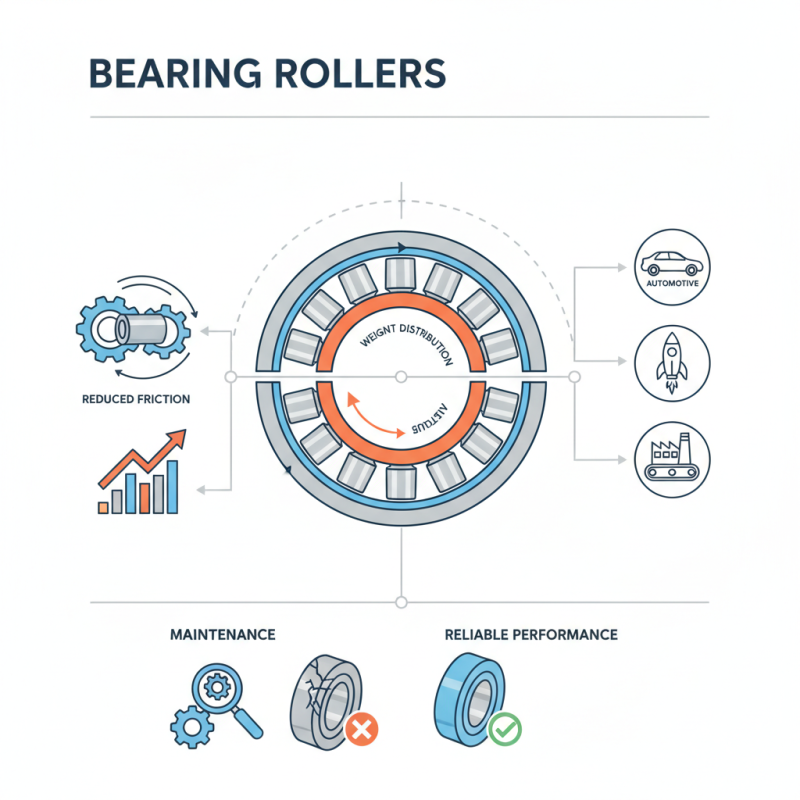
A Bearing Roller is a crucial component in various machinery. It aids in reducing friction between moving parts. This mechanism allows smoother operations and enhances efficiency. Understanding how a Bearing Roller functions is essential for many industries.
When loaded, Bearing Rollers distribute weight evenly across their surfaces. This process minimizes wear and tear, prolonging equipment life. These rollers come in different shapes and sizes, tailored for specific applications. Their reliable performance makes them invaluable in automotive, aerospace, and manufacturing sectors.
Despite their effectiveness, misalignment can cause inefficiencies. Regular maintenance and inspections are vital. Operators must recognize signs of wear. Knowledge on Bearing Roller functionality can lead to better decision-making. Ultimately, enhancing operational reliability is the goal for many businesses.
Bearing rollers are essential components used in various machinery. Their main function is to reduce friction between moving parts. Understanding their basic structure is crucial for effective utilization.
A bearing roller typically consists of a cylindrical shape, designed to facilitate smooth rotation. The outer surface may have various textures, affecting traction and wear. The materials used can range from steel to plastic, offering multiple performance levels. A critical part is the cage, which holds the rollers in place, preventing them from coming into contact with each other. This arrangement minimizes friction and maximizes efficiency.
Tips: Regular maintenance can extend the life of bearing rollers. Check for signs of wear and replace them when necessary.
Bearings also come in different configurations to match specific applications. For instance, some designs feature a larger diameter for enhanced load capacity. In contrast, others have a narrower form, suitable for compact machinery. Selecting the appropriate type is key.
Tips: Consider the working environment. Contaminants can affect roller performance. Choosing seals can help improve resilience.
Understanding the structure and function of bearing rollers empowers users to make informed choices. Regular assessment can prevent unexpected failures, ensuring reliable operation in machinery.
Bearing rollers are essential components in various machinery, facilitating smooth motion. They convert rotational or linear motion into precise movements. Understanding different types and designs helps optimize performance across diverse applications.
Cylindrical rollers are commonly used in heavy-load applications. They offer high radial load capacity. A 2022 industry report highlighted that cylindrical bearings account for about 35% of the global bearing market. Such rollers distribute loads evenly across a larger surface area, enhancing durability. Moreover, they can operate efficiently at high speeds.
Spherical rollers provide self-aligning properties, making them ideal for misaligned shafts. Their unique design can mitigate wear, but they may not be suitable for all situations. A 2023 study showed that spherical rollers increased equipment lifespan by 15% in specific applications. However, their complexity can lead to maintenance challenges. Understanding these nuances is crucial for selecting the right bearing roller for specific needs.
| Type of Bearing Roller | Design Features | Applications | Load Capacity |
|---|---|---|---|
| Cylindrical Roller | High radial load capacity, reduced friction | Electric motors, gearboxes | Up to 1,000 kN |
| Spherical Roller | Self-aligning, accommodates misalignment | Heavy machinery, mining equipment | 1,200 kN - 2,500 kN |
| Tapered Roller | Conical shape allows for axial and radial loads | Automotive wheel hubs, axles | 800 kN - 3,000 kN |
| Needle Roller | Compact, high load carrying capacity | Automotive components, compact machinery | 200 kN - 1,500 kN |
Bearing rollers play a crucial role in reducing friction and supporting loads in various applications. By distributing weight over a larger surface area, they minimize contact between moving parts, which significantly lowers friction. According to a report by the American Society of Mechanical Engineers, friction can increase energy consumption by about 30% in machinery. Utilizing bearing rollers can help mitigate this issue, improving efficiency.
These rollers come in various shapes and sizes, designed for specific load requirements. Cylindrical and tapered bearing rollers are commonly used in heavy machinery to support massive loads effectively. Research indicates that properly lubricated bearing rollers can reduce wear and extend component lifespan by up to 60%. However, improper installation or maintenance can lead to premature failures, a reminder that attention to detail is crucial.
An efficient bearing roller system not only enhances performance but also impacts overall cost-effectiveness. In the automotive industry, for instance, a well-functioning roller can improve fuel efficiency significantly. While the technical details of their function are well-studied, engineers must remain vigilant about the conditions under which these components operate. Continuous monitoring is needed to ensure reliability and prevent unforeseen breakdowns.
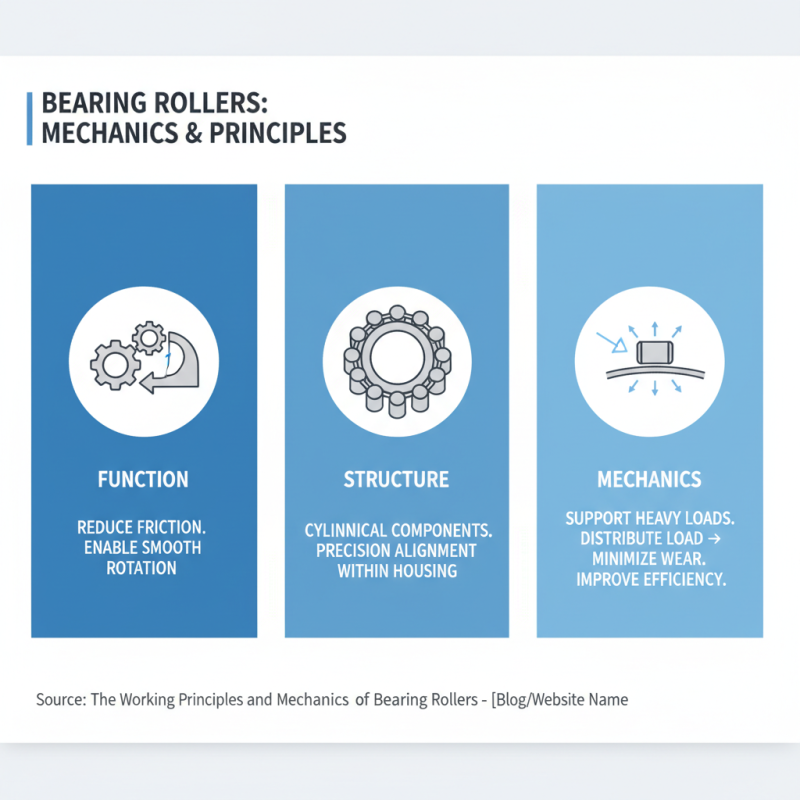
Bearing rollers play a crucial role in reducing friction in machinery. These cylindrical components allow smooth rotation while supporting heavy loads. The mechanics of bearing rollers rely on precise alignment within their housing. By distributing the load across a larger surface area, they minimize wear and tear. This setup enables machinery to operate efficiently.
The working principles of bearing rollers involve rolling motions rather than sliding. This feature significantly reduces friction and energy loss. As the roller rotates, it maintains contact with the internal surfaces of the bearing. This consistent contact helps in distributing forces evenly. Interestingly, the design of bearing rollers varies to suit different applications, from small motors to large industrial machines.
However, flaws can emerge. Misalignment during installation can lead to excessive wear or premature failure. Regular maintenance is essential to ensure optimal performance. Each component must be inspected for signs of damage. Understanding these mechanics fosters a proactive approach to machinery care. This knowledge can help improve reliability and extend lifespan.
: Bearing rollers facilitate smooth motion in machinery by converting rotational or linear motion into precise movements.
Cylindrical rollers have high radial load capacity and distribute weight evenly. They enhance durability in heavy-load applications.
Spherical rollers provide self-aligning properties and can increase equipment lifespan by 15% in specific applications.
Reducing friction is crucial as it can lower energy consumption by up to 30%, improving overall efficiency.
Properly lubricated bearing rollers can reduce wear, extending component lifespan by up to 60%.
Improper installation or maintenance can cause premature failures. Attention to detail is essential.
Continuous monitoring ensures reliability and helps prevent unforeseen breakdowns in machinery.
Yes, a well-functioning bearing roller system can significantly improve fuel efficiency in the automotive sector.
No, while they mitigate wear, their complexity can pose maintenance challenges and may not fit every situation.
They come in various shapes and sizes, tailored for specific load requirements in different machinery applications.