Leave Your Message

2026 Best Auto Bearing Manufacturers for Global Buyers

The 2026 automotive bearing market is changing beneath the vehicle, not merely inside the engine bay. According to OICA’s 2024 production data, global vehicle manufacturing exceeded 92 million units. Each vehicle may contain dozens of bearing applications, from wheel hubs to electric motor systems. This scale makes Auto Bearing quality a purchasing decision with measurable financial consequences.

The International Energy Agency reported that global electric car sales surpassed 17 million units in 2024. Electric vehicles create different bearing demands, including higher rotational speeds, electrical insulation, lower friction, and quieter operation. The IEA Global EV Outlook 2025 also highlights continued growth in electric mobility. Manufacturers must therefore prove more than basic load capacity. They need evidence from endurance testing, contamination control, traceability, and application engineering.

This guide evaluates the 2026 best Auto Bearing manufacturers for global buyers. It considers product range, ISO 9001 and IATF 16949 certification, testing capabilities, delivery coverage, and aftermarket support. SKF, Schaeffler, NTN, NSK, Timken, JTEKT, and other established suppliers receive attention because their technical documentation is comparatively accessible. However, reputation alone is insufficient.

A strong catalog can still hide inconsistent batch control. A low quotation may become expensive after premature failure. Buyers should examine dynamic load ratings, seal design, grease specifications, noise data, and warranty terms. Some supplier information remains difficult to compare fairly. That limitation deserves acknowledgment. No ranking can replace sample testing under real road, temperature, and maintenance conditions.
2026 Best Auto Bearing Manufacturers for Global Buyers

What Auto Bearings Are and Why They Matter in Vehicle Performance

Auto bearings are precision components that let wheels, shafts, and gears rotate with controlled friction. They usually contain hardened steel rings, rolling elements, a cage, lubricant, and protective seals. Each part has a specific job. Together, they carry vehicle loads while limiting heat, noise, and energy loss.

In wheel applications, a bearing supports the vehicle’s weight during braking, cornering, and uneven road impacts. A worn bearing may produce a low humming sound that rises with speed. Excessive play can affect wheel alignment and steering feel. Grease leakage, rough rotation, or unusual discoloration also deserves attention. Small defects can become expensive failures. Sometimes, the noise is mistaken for tire wear, so proper testing matters.

For global buyers, reliable manufacturers should provide dimensional inspection records, material traceability, seal testing, and clear load ratings. Heat treatment quality is especially important because weak steel can fatigue under repeated stress. In my view, laboratory data alone is not enough; field performance and consistent batch control matter more. I may be overly cautious, but a bearing that meets drawings can still disappoint when lubrication, installation, or contamination control is poor. Good suppliers explain these limits clearly and support verification before large orders.
Key Types of Auto Bearings and Their Common Applications

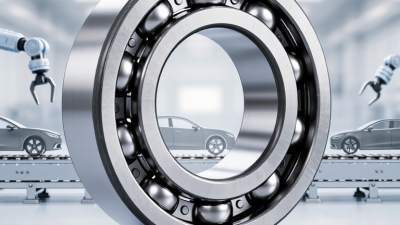
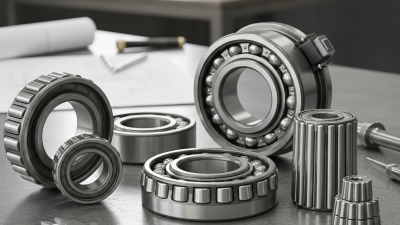
Automotive bearings support rotating parts under vibration, heat, and changing loads. Deep-groove ball bearings commonly serve alternators, electric motors, and auxiliary systems. They handle radial loads well and tolerate moderate axial forces. In compact engine areas, their low friction helps reduce energy loss.

Tapered roller bearings are widely used in wheel hubs and differentials. Their angled rollers manage combined radial and axial loads during cornering and braking. Wheel hub bearings must also resist water, road dust, and repeated impact. Heat tells a story. A discolored raceway may indicate poor lubrication, excessive preload, or misalignment. Needle roller bearings fit transmission gears, rocker arms, and universal joints where space is limited. They provide high load capacity with a small cross-section, but they need accurate shaft surfaces.

Thrust bearings support axial forces in clutches, transmissions, and steering mechanisms. Spherical roller bearings can accommodate misalignment in selected driveline and industrial vehicle applications. During sourcing, buyers should verify load ratings, clearance, sealing design, operating temperature, and dimensional standards. Fit matters. A bearing that matches the catalog size may still fail if the housing is distorted or installation force passes through the rolling elements. Field inspections often reveal this overlooked mistake. Ceramic or hybrid designs may offer useful speed and temperature benefits, yet their higher cost needs careful justification. In some applications, the “best” bearing is not the most advanced one, but the one supported by reliable testing, traceable materials, and consistent quality control.

2026 Best Auto Bearing Manufacturers for Global Buyers - Key Types of Auto Bearings and Their Common Applications
Bearing Type Primary Load Capability Main Automotive Applications Typical Location or System Common Seal or Shield Options Typical Material Key Selection Considerations
Deep-Groove Ball Bearing Primarily radial; also handles moderate axial loads in both directions Electric motors, alternators, cooling fans, pumps, accessory drives Engine accessories, electric powertrain units, HVAC blowers Open, metal-shielded, or contact-sealed designs such as 2Z or 2RS configurations Through-hardened bearing steel; stainless steel may be used for special environments Speed capability, low friction, operating temperature, contamination protection, and electrical-current risk
Angular-Contact Ball Bearing Combined radial and axial loads; axial capacity depends on contact angle and arrangement Electric drive units, turbocharger auxiliaries, steering systems, precision gear assemblies High-speed shafts, e-axle support systems, steering and actuator modules Usually open or shielded; sealed versions are available for maintenance-free assemblies High-carbon chromium bearing steel; ceramic rolling elements may be used for electrically demanding applications Contact angle, preload, paired arrangement, speed, stiffness, and axial load direction
Tapered Roller Bearing High combined radial and axial loads in one direction; commonly installed in opposed pairs Wheel hubs, differentials, transmissions, final drives Front and rear wheel bearing units, pinion and differential supports Generally lubricated with grease or gear oil; integrated seals are common in hub assemblies Through-hardened or case-hardened bearing steel Dynamic and static load ratings, preload or endplay, stiffness, misalignment, and lubricant compatibility
Cylindrical Roller Bearing Very high radial load capacity; axial displacement depends on the internal design Transmissions, electric motors, hybrid modules, high-load gear systems Gearbox shafts, motor rotors, and high-load rotating assemblies Usually open and oil-lubricated in transmissions; sealed versions are used in selected modules Case-hardened or through-hardened bearing steel Radial load, allowable axial displacement, rib design, speed, lubrication, and housing stiffness
Needle Roller Bearing High radial load capacity relative to cross-sectional height; limited axial load capability Universal joints, rocker arms, planetary gears, transmissions, compressors Compact gear trains, valve trains, and joint mechanisms Drawn-cup sealed or open designs; grease or oil lubrication depending on the assembly High-carbon chromium bearing steel needles and races Available space, raceway hardness, shaft quality, oscillation, lubrication, and edge loading
Spherical Roller Bearing Very high radial loads with moderate axial loads; accommodates shaft or housing misalignment Heavy-duty commercial vehicle drivelines, auxiliary equipment, industrial vehicle systems Large rotating shafts and applications exposed to deflection or mounting misalignment Open or sealed designs; grease lubrication is common for sealed units Through-hardened bearing steel Misalignment angle, load magnitude, allowable speed, clearance, lubrication, and mounting method
Thrust Ball Bearing Primarily axial loads; radial load capacity is limited Clutch release mechanisms, steering components, actuator systems, selected transmission functions Axial-load points with comparatively low radial loading and moderate speed Open or shielded designs; sealing depends on the surrounding component Through-hardened bearing steel Axial load direction, speed, alignment, washer flatness, lubrication, and minimum preload
Automotive Wheel Hub Bearing Unit Combined radial, axial, and moment loads generated by vehicle weight, cornering, braking, and road impact Passenger cars, light commercial vehicles, electric vehicles, and SUVs Front or rear wheel-end assemblies Factory-sealed, pre-greased, maintenance-free unit with integrated multi-lip sealing Bearing steel rings and rolling elements; flanges commonly use automotive-grade steel Hub geometry, flange runout, seal durability, sensor integration, preload, corrosion resistance, and installation accuracy
Buyer reference: Final bearing selection should be verified using the application’s speed, load spectrum, temperature, lubrication, contamination level, mounting tolerances, expected service life, and applicable dimensional and quality requirements.

How to Evaluate Auto Bearing Manufacturers in 2026

How to Evaluate Auto Bearing Manufacturers in 2026

A serious evaluation starts with evidence, not catalog claims. Grand View Research projects continued growth in the global automotive bearings market through 2030, increasing pressure on suppliers to prove capacity and quality. Ask for ISO 9001 and IATF 16949 certificates, but verify their scope and expiry dates. A certificate alone proves little. Request batch-level material records, heat-treatment results, dimensional reports, and failure-analysis samples. The supplier should explain how it controls steel cleanliness, surface roughness, preload, and sealing performance.

Test data must match the vehicle application. ISO 281 calculations can estimate bearing fatigue life, yet real roads add dust, water, shock loads, and poor installation. Request endurance results under comparable speed, temperature, and radial load. The European Environment Agency reports that average new-car mass and power have increased in recent years, raising demands on rotating components. Therefore, confirm load ratings for hybrid and electric platforms, not only conventional drivetrains. Ask whether the manufacturer can support vibration testing, low-noise measurements, and corrosion testing.

Supply-chain discipline matters just as much. Check monthly capacity, tooling ownership, inspection equipment, and contingency plans for steel and lubricant shortages. Audit one production line if possible. Review nonconformance records, not only impressive samples. My own evaluation bias is worth noting: polished samples can distract from weak process control. I would rather see an honest corrective-action report than a perfect presentation. Delivery performance should be measured against documented data, such as the supplier’s twelve-month on-time rate, not a verbal promise.

2026 Best Auto Bearing Manufacturers for Global Buyers

How to Evaluate Auto Bearing Manufacturers in 2026

This 100-point procurement framework prioritizes evidence that global automotive buyers can verify, including IATF 16949 quality systems, traceability, application testing, production capacity, delivery performance, total cost of ownership, regulatory compliance, and sustainability. Buyers should validate each category through audits, technical documentation, sample testing, and program references.

Leading Auto Bearing Manufacturers for Global Buyers

Leading auto bearing manufacturers for global buyers are judged by more than production volume. They must deliver stable tolerances, traceable steel, reliable seals, and consistent delivery. Grand View Research estimates the global automotive bearings market will expand at roughly 6% annually through 2030. The report links growth to vehicle production, electrification, and tighter efficiency requirements. These trends raise pressure on manufacturers to control friction and noise.

Experienced buyers should inspect ISO 9001 and IATF 16949 certification, laboratory capability, and batch-level traceability. A dependable supplier can provide hardness results, dimensional reports, grease specifications, and endurance-test records. For electric vehicles, bearing manufacturers also need solutions for higher speeds, electrical current protection, and reduced acoustic vibration. The International Organization of Motor Vehicle Manufacturers reported global vehicle production above 93 million units in 2023, showing the scale of replacement and original-equipment demand. Yet market size does not prove quality. That assumption deserves scrutiny.

Tips: Request samples from two production batches. Compare roundness, seal drag, noise, and packaging damage. Ask for failure-analysis support before signing a long-term contract. Also check regional inventory and realistic lead times. Some manufacturers report impressive capacity, but their export service may remain weak. Freight disruptions, language gaps, or incomplete technical files can quickly erase a low unit price. Use an independent inspection when the application is safety-critical.

Global Standards, Quality Factors, and Purchasing Considerations

2026 Best Auto Bearing Manufacturers for Global Buyers

Global buyers should judge auto bearing suppliers against recognized standards, not attractive catalogs. ISO 492 helps define dimensional and running accuracy. ISO 281 supports rolling fatigue life calculations. ISO 9001 certification can indicate controlled processes, but it does not guarantee perfect products.

Quality starts with steel cleanliness, hardness consistency, raceway geometry, and cage strength. In supplier audits, request material certificates, heat-treatment records, and batch-level inspection data. Check vibration and noise results, especially for wheel hubs and high-speed assemblies. A bearing may look flawless under normal lighting. Microscopic surface damage can still shorten service life. Sealing performance also matters in dusty roads, winter salt, and frequent water exposure.

Purchase specifications should include radial load, axial load, speed, temperature, lubrication, clearance, and installation conditions. Ask for samples from normal production batches, not specially prepared units. Verify markings, packaging, traceability, and storage controls before placing a large order. Delivery reliability deserves equal attention. Late shipments can stop an assembly line.

A certificate is not proof of every claim. I have seen technically strong suppliers lose consistency after changing steel sources. That detail is easy to miss. Buyers should compare test methods, measurement equipment, and acceptance limits. Independent inspection adds cost, yet it may reveal differences between samples and mass production. No evaluation is flawless. A written quality agreement creates accountability when field data exposes an unexpected failure.